
The only established job title I agree with, is ‘Consultant’. They can:

  1. say without fear of repercussion; “I have no idea, but I know someone who does.” They are enablers, not [necessarily] SMEs;
  2. add new projects / functions / experiences to their CVs/resumes because their entire role isn’t defined by a single job description; and
  3. stop someone asking questions about what they do, because the answer; “I’m a consultant.” fulfilled the societal obligation.

Every other title out there tells you what that person does, and to an uncomfortably large [judgemental] degree, WHO they are. Ever taken an instant dislike to someone who told you they were a traffic warden? But how many people really think of themselves as defined by their job? Nurses perhaps, charity workers, priests? Do you really think of yourself as an ‘actuary’, or a ‘receptionist’?

While there are many jobs out there where your personality shines through, most of us are not doing them. We’re working in the information age where we our entire output can easily point to nothing tangible. We’ve ‘made’ nothing, yet we still want to believe that we are making a positive difference, don’t we? How can we possibly put the age old corporate strictures around something so fundamentally different as today’s job market?

Doctors don’t prescribe leaches and bleeding for every illness, banks don’t process every transaction on paper (though I think Lloyds might), so why do we maintain the centuries old concept of pigeon-holing everyone into a job title? Would it not make more sense to describe all the FUNCTIONS or TASKS a business requires, then let the right individual(s) perform them?

How often does the best person to perform a task actually get to do it? They may be in the wrong department, the wrong ‘grade’, or have the wrong boss, but the effect is the same; the person who is paid to perform the task as part of their defined job description does it, and possibly nowhere near as well as the person best suited.

There is a very good chance that no-one even KNEW there was someone who could do it better. Usually this is a combination of two things; 1) no-one bothered to find out, and 2) no-one volunteered the knowledge. This is not just about employers not providing an environment that embraces change, it’s also about employees that don’t WANT change. Either be the agent for change, or don’t complain about the status quo.

How many times have you had an idea for a process change, and new profit line, a morale booster etc, then had it shot down for one or more of the following reasons:

  • It’s not your job, go back to doing what you’re PAID to do;
  • It’s not the right time – with no indication of when it MIGHT be the right time;
  • We’ve always done it this way – try not to punch this person in the face; and/or
  • It simply won’t work – with no indication as to why.

…or a thousand other reasons that all amount to the same thing; You have your day job, leave it at that. You may even have been made to feel bad about suggesting it in the first place, which means you’ll never do it again.

The reasons for this are as infinite as the excuses. A few are:

  • Your boss has no idea what he/she is doing and you’re humiliating them;
  • Your organisation is led by someone with no imagination, or ability to inspire; and
  • They simply don’t understand the concept.

YOU can be just as much to blame however:

  • You spend all your time at work working on things that you are not being paid for, and your real work suffers;
  • You have put no real thought into the idea, or formalised your plan; and
  • Your idea is crap.

But these examples don’t change the fact that most organisations hire people to fulfil a specific task without taking the individual’s full skill-set into account. They are then either marginalised, or actively held back from developing additional skills, or expanding their function beyond a very limited scope (usually departmental).

Nature doesn’t label, it just is. The strongest in the pack is Alpha, the best hunters lead the hunt, and every living thing just gets on with doing what they were born to do. Not humans. We have to label, compartmentalise, pigeon-hole, classify – I mistyped that as ‘calcify’ which is amazingly appropriate – in order to understand. We have good-vs-evil, up-vs-down, in-vs-out, just so we can explain things to ourselves.

In the workplace, the larger a business becomes, the more disconnected it becomes. There is no room for the individual, let alone the individual’s unique set of talents and skills, but I believe this is exactly where we need to go. It may well be that the guy in accounts payable is a wizard at data analytics, so have him help out in Marketing. The girl working in Research & Development has an uncanny ability to relate to people and “talk their language”, so take her out to close the more complex deals.

Once you know the individuals, titles are irrelevant. People just KNOW who they are. The two people above are “the data guru’ and ‘the closer’ respectively, and are happy because they get to do what they’re good at! Who knows, they may even get appreciation for it, and the organisation is happy because they have a competitive advantage.

Even hiring becomes easier. You don’t hire against a job title, you hire against a required skill-set, which is MUCH easier to interview for. Then when you ask that person what title they would like, they can be creative / unique enough never to feel as though they are just another cog in the wheel.

Of course, to the outside world you will still need to give them known titles. Until this catches on anyway. And some people WANT to go to work 9-5, be anonymous, and that’s OK, every business can’t be full of entrepreneurs and go-getters.

[If you liked this article, please share! Want more like it, subscribe!]
I had a conversation the other day that reminded me of a blog post I had meant to write a while back.

When I found myself back in the job market, I realised that I had done nothing to prepare for what amounts to the inevitability of change. I had not written a CV/resume in 13 years, had not spoken to recruiters outside of the hiring process (for my team), and hadn’t interviewed once.

In almost 13 years, not once.

Quite a bit has changed in 13 years. For a start, I’m considerably balder, and fatter, but on the plus side I am also considerably more experienced. However, that experience – like luck – can be good OR bad, and it’s put into context one way or another by those you’ve met along the way. It’s what others think and say about you that makes all the difference, and they are connected as never before, which means a bad reputation can travel far and wide …quickly.

You could have the most polished CV on the planet, a LinkedIn profile second to none, and may even have a blog [cough], but if potential employers ask around (which they will) and get nothing but red flags, you are already at a disadvantage. Everyone you meet at work has the ability to help or hurt you down the road, just as you do to them. This is a power that should never be taken lightly, or abused.

I now see my connections as a safety net that I didn’t know I had. They rallied around me, called, emailed, laughed, gave glowing references, but above all, they reached out to THEIR contacts and passed the word.

It was not long before I was having conversations with people of whom I had never previously heard of, but now count in my corner. Most of these conversations didn’t lead to anything related to employment, but that’s OK, I now have a bunch more people to whom I can turn for guidance or advice in specific areas. Or even better, if they need anything, they know they can now ask me. Our skill-sets are shared, and we no longer have to know the answer to everything, because we know someone who does. That’s how it works; Ask.

However, this is not about what they can do for you. By all means ask for help when you need it, but if this is not mutual, it simply does not work. If you don’t care about the others in your circle, your connections will not last long.

There are a thousand books on networking out there, and you don’t have to be an extravert to do it. By nature I’m introverted, and derive my strength and sustenance from internal resources, but this does not stop me from being genuinely interested in others. Just in small doses, and very select people! 🙂

If there’s one accomplishment of which I am proud after ~13 at the same company, it’s to whom I still talk now, from both sides of the old fences.

So to my circle, I say thank you very much for everything.

How can I help you?

[If you liked this article, please share! Want more like it, subscribe!]

When first notified that your role is at risk for redundancy, your first feelings are an equal mixture of disbelief and panic. This fades into being upset, then angry, then numb.

This is almost identical to breaking up with a boyfriend/girlfriend, though I have to assume a lot less kissing and hugging had been previously involved.

You may even try to work something out with your employer; apply for other jobs internally, write long rambling documents about what you COULD do, and how you could help if you stayed. It’s only natural to try everything.

But you have to ask yourself some VERY hard questions, and you may not like the answers; Did this happen to just you, or was your layoff one of many? Do their reasons make sense? Your introspection will pay off eventually, and allow you to move on much faster than if you hold on to your pain, and/or sense of injustice.

Besides, it may well be redundancy was their way of being NICE, they can always fire you…

The longer you have been in an organisation, the harder this is, and it’s natural to feel a little bitter and resentful. Venting to your friends is one thing, it’s even healthy in small doses, but venting to everyone you talk to, or in writing, or worse, in your next interview, will do nothing but hurt you.

Don’t do it.

You will be asked about why you left your previous employer, and because redundancy is a part of business, don’t raise any red flags by being derogatory or negative. Nor do you have to go the other way and say how much you enjoyed the previous job, that just makes your interviewer feel as though he/she is your second choice.

Be factual, and move on.

Once your redundancy has been finalised, and you have accepted the reality of it, get busy. Revamp your CV (which should always be up to date), revamp your LinkedIn profile, and start calling people. It’s not until something like this happens that you realise just how many people you know out there, and just how many will bend over backwards to help you. Reconnect, find a recruiter you trust, and see what’s out there.

There seems to be equal opinions on whether you should take some time off (if you can afford to), or jump right back on the saddle. Ignore everyone (except your spouse, that’s a bad idea) and do what’s right for you.

You can also try blogging, even if it’s just for a while, there is nothing quite like writing things down to put clarity into your thoughts. You will also find that it helps crystallise in your mind what you want to do next. Have a read of this post again, and bear it in mind when choosing your next adventure; Never Follow The Money

But what happens when your company is in the middle of laying people off, and you think you may be next?

You have to be even more careful, as you may just put yourself in a position to BE laid off that you were not in before! You are worried, so your motivation and morale slip, then your attention slips, closely followed by loss of productivity. This will be noticed, and you have now put yourself firmly in their radar in a negative way.

I’m not saying don’t start looking around for something else, in fact you should ALWAYS be open to opportunity, but you still have a job to do, so do it well.

I don’t know what the statistics are, it’s too nice outside to bother with research, but I’d say over the course of your careers you will be fired once, and laid-off once. So assume it will happen to you at some point and be ready for it.

[If you liked this article, please share! Want more like it, subscribe!]

Thanks to the more unscrupulous vendors, security is becoming as complex as the law. Privacy therefore is at the top of the list of sticky topics because it also involves both the law and security. More countries are effecting privacy laws than ever before, but just like in a regular business, functionality and security must be balanced to be effective.

I’m not going to list all of the ongoing privacy issues in the press, but the biggest two currently are; the Prism/whistleblowing/NSA scandal, and the EUs Data Protection Directive. While worlds apart in their impact and aims, they still raise a question that I’ve not seen addressed very often. Probably because there is no one right answer, but the question of how much privacy is too much should not be ignored or any semblance of balance is impossible. Also, it seems that unless we’re bashing the perceived bullies (Government, big business), there’s not much interest in this side of things.

So, Prism, summarised and paraphrased, is an anti-terrorism program that has unprecedented access to enormous amounts of personal data.

Proponents state that it’s necessary for national security, opponents state that it’s an abuse of power / attack on civil liberties and so on. But who’s right? If you choose a side – and to the extreme – you are either saying it’s OK for the Government to do whatever it takes to defend its people, and that the end justifies the means, or you’re saying that an individuals right to privacy outweighs the security of a nation. Clearly both of these positions are nonsense, but what is the right answer? It has to be somewhere in between., right?

However, to get the middle, both sides need to accept responsibility; Government for not becoming Big Brother-esque, and individual citizens for paying the price in personal privacy for the freedoms and conveniences we frequently take for granted.

For example, if you ask any victim of a terrorist attack, a hate crime, harassment, or a stalker-ex, whether or not they would have traded complete loss of privacy to avoid their pain, and I think the answer is a given.

However, now ask ME whether or not I would entirely relinquish MY privacy to prevent this from happening to someone else – which I would do in a heartbeat -, and you now have the gist of why this issue is so contentious (some are already calling it – terribly un-originally – Prism-gate). People want security, but they don’t want to accept the cost for it, which in todays plugged-in/online/Internet/information age, that cost is their privacy.

As for the EU Data Protection Directive, that’s about the far less glamorous subject of making sure organisations protect the data in their possession, and while less life-threatening, leads to the same question. This time it’s about [for example] the ability of an organisation to sell you stuff that you want, or didn’t even know you wanted but now you can’t live without (like the iPhone). They want to sell you stuff, you want your data protected or removed altogether.

Personally I want organisations to know EXACTLY what I like and don’t like. That way I’ll get less spam and pop-up ads regarding adult nappies/diapers and erectile dysfunction, and more on amazing gadgets and toys that will make my life complete. This requires absolutely enormous amounts of data, and is a true use of Big Data.

Not everyone agrees.

However, WE choose to plug in, we’re not forced. I have Linkedin, Facebook, Twitter, and more online bank / credit card accounts than I know what to do with. Sadly the accounts are mostly empty, but that’s not the point, which is why I have chosen these methods of communication and convenience to make my life better. Which they do…vastly.

We are not owed this functionality, we have a choice to use it or not. If you want it, you must pay for it.

How many of you read the privacy notices, or terms & conditions when you sign up for online services? No, me either, so I’m not going to complain if they go ahead and do exactly what they told me they were going to do.

I cannot speak to the law or politics, nor can I wax philosophically on human nature, but what I can talk to is personal accountability. You are owed nothing, except that which you earn. From your income, to your rights, to your karma, you get back what you put in. So perhaps what we should all do instead of complain, or demand that heads roll, is be a little more circumspect in our online interactions:

  1. Don’t post inappropriate comments on FB/Twitter or ANY form of social media or email. Assume that this information will NEVER go away;
  2. Limit your online banking and purchasing to known-good sites, check for HTTPS in the URL (secure transmission) , and CHOOSE A GOOD PASSWORD!;
  3. Make sure ALL of your online credit card / bank accounts have fraud and theft protection;
  4. Sign up for credit and identity monitoring services (I have two running, one US and one UK);
  5. Read the Terms & Conditions!;
  6. Do not even TAKE revealing or compromising pictures of yourself, or others, on any online-capable device …EVER (I think if I was to do that it would qualify as an offence against humanity, or maybe even a WMR (Weapon of Mass Revulsion));
  7. When you’re done with an online vendor, delete the account, and write to them invoking your right to erasure;
  8. Read my blog! 🙂

Personally, I LOVE the fact that London is full of cameras, I’m doing nothing wrong, and I feel better about my wife being out when it’s dark. I don’t care if some spotty geek in Fort Mead, MD is reading my personal email, or my FB posts, I’m not being seditious, or inappropriate, and if they derive pleasure reading about my wife and me discussing our 2012 taxes, good luck to him/her.

I want safety in the streets, safety for my country, AND the convenience of all that being online gives me, and if my privacy is the price I must pay, so be it. I trust the ‘official’ watchers infinitely more than the criminals or terrorists, but it’s MY responsibility to give NO-ONE access to more than I can afford to lose.

[If you liked this article, please share! Want more like it, subscribe!]

I think everyone has heard the phrase; “Do what you love, the money will follow.” But not everyone has the opportunity to do what they love, life has a way of complicating things beyond our individual abilities to make a living from our hobbies. If we even have one…

That leaves us with spending our 9-5 workdays (unless you’re in France) doing something that we may not hate, but only do because we have to pay the bills. This all too often leads us to either look for jobs that pay more money, regardless of what the job is, or stay in jobs we don’t particularly like because we can’t get more elsewhere. Money is not the issue here, your sanity is.

Security is a perfect example of how this can not only ruin a career, but damage the image of every other practitioner; PCI has allowed 1,000s of barely adequate consultants to demand extortionate salaries because of the age old supply-and-demand price hikes. These offending QSAs are reaping the benefits now, but because the PCI DSS is so limited in its scope, those QSAs are learning nothing new, often for years on end. What happens when PCI – in its current form – dies on the vine (which it will)? Those same QSAs will have lifestyles to match their over-elevated income, which they cannot hope to maintain given their almost redundant, or at best limited, skill-sets.

As for the other practitioners, the ones who are real security consultants, and not just QSAs? They will be tarred with the same brush as the other QSAs, who didn’t have the skills to deliver good service. So you will find some consultants -usually the ones you want to work with – will not provide these services at all for fear of damage to their reputation.

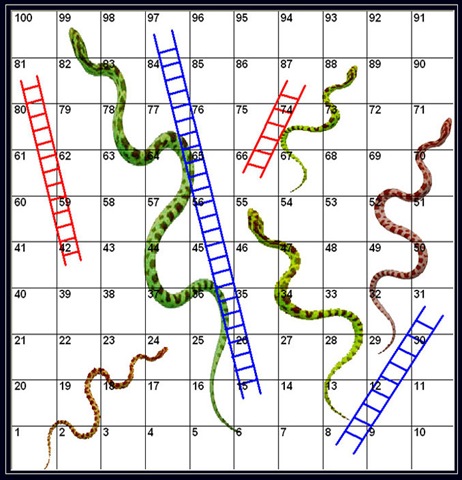
Who remembers Snakes & Ladders? I think it provides a rather good visual on what I mean by following the opportunity;

ladderssnakesboardgamescreenshot

Notice how the ladder starting in cell 15 begins much lower than than the one starting in cell 42, but goes higher at the end? Your career is no different, as it’s OK to go backwards in terms of income, responsibility, prestige etc, just as long as the OPPORTUNITY is there to exceed what you had before. Instead of climbing just any ladder, choose the one that takes you the farthest, not the one that seems to offer the most money up front.

Another way to look at how limiting following money can be, is to reflect on your strengths vs. your weaknesses. Do you enjoy doing the things you’re good at far more than the ones you don’t? Are you exponentially better at the things you’re good at than those you aren’t? Yes is probably the answer to both questions, so why would you stick at a job you’re not great at, just for the money? Does it not make more sense to find what you enjoy doing AND what you’re good at, then get on THAT ladder, regardless of where it begins?

I’m no tree-hugger, but we could all do more introspection in order to find out what we’re good at, I can highly recommend you start with these 2;

1. Myers Briggs Test – You’ll find a spreadsheet I compiled years ago based on the Myers–Briggs Type Indicator (MBTI) here. Follow the links on tab 3 for the descriptions (I’m an INTJ).

2. Now, Discover Your Strengths – A excellent book by Marcus Buckingham that debunks the old theory of working on your weaknesses in order to be a ‘well rounded’ person.

These are just a starting point, and the results should not be taken as gospel. Take what you can from these, then go find other ways to learn more about yourself. Regardless of any set-backs I have experienced in my career, knowing what I can do, and do well, leaves me very optimistic.

I told my wife when we first met that I don’t care what she does, or how much she earns as long as she loves what she does, and tries to do what she does better every day.

It’s time to take my own advice…

[If you liked this article, please share! Want more like it, subscribe!]